Etex – Introducing low-code as part of their Industry 4.0 Program
After a trial project in early 2021, Etex’s IT, business and manufacturing teams are now investing in Mendix to digitize their shop floor processes and streamline manufacturing flows on a global scale.
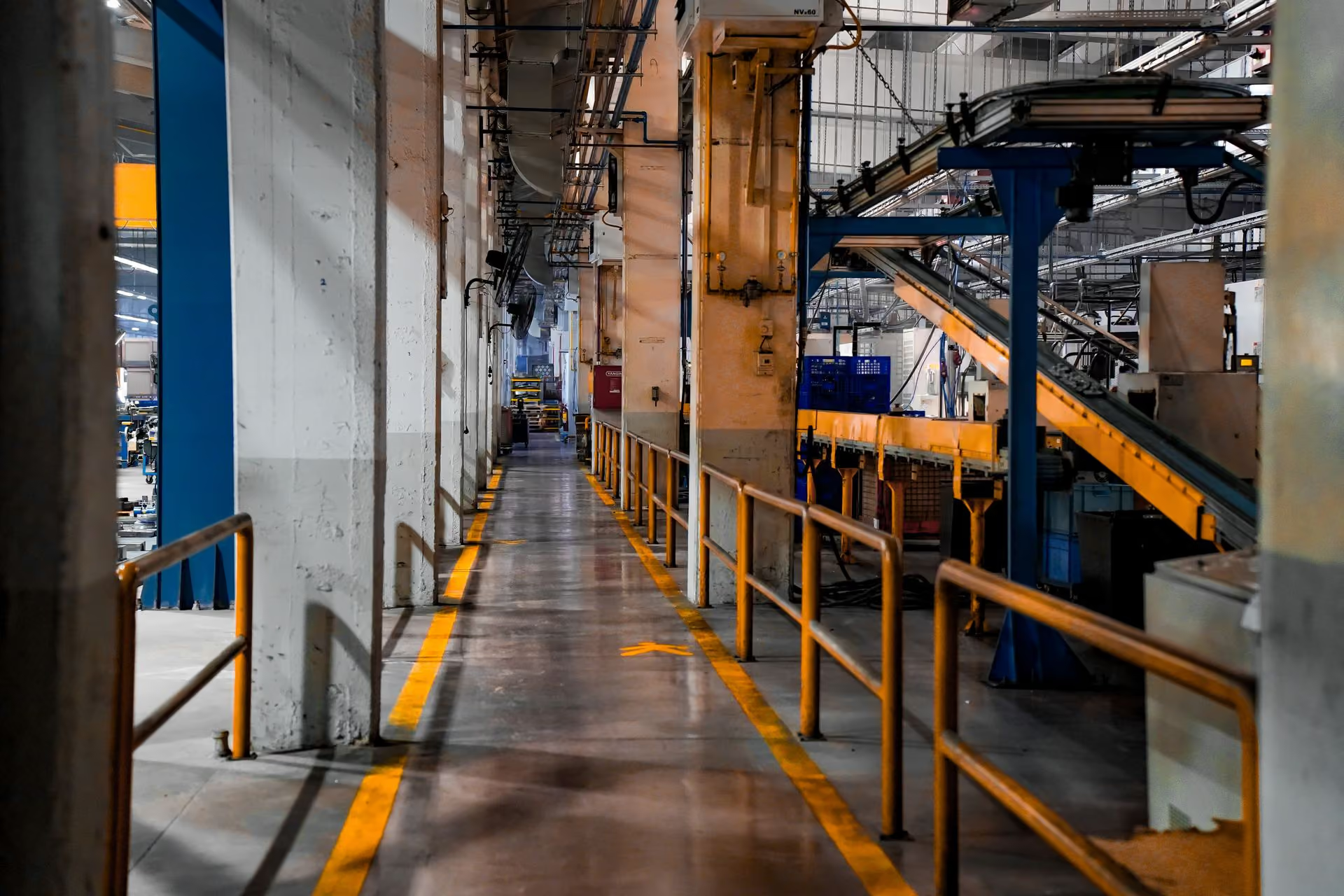


The global building material manufacturer and pioneer in lightweight construction Etex has joined the growing community of low-code lovers. After a trial project in early 2021, their IT, business and manufacturing teams are now investing in Mendix to digitize their shop floor processes and streamline manufacturing flows on a global scale.
Inspiring ways of living
Etex is headquartered in Belgium and operates more than 110 production sites in 42 countries. Founded in 1905, Etex wants to inspire people around the world to build living spaces that are ever more safe, sustainable, smart and beautiful. In 2020, as part of their strategy, the company accelerated with its digital innovation, and so they launched their Industry 4.0 Program, aimed in part at digitalising their shop floor and uniting their various stakeholder groups into a more cohesive whole.
The right place to start
As they began looking into digitalising their manufacturing processes, they of course soon pondered the age-old question – traditional MES approach or something different? They decided to give low code a try, and connected with Mayker to carry out a trial project. The next question of course was what process to start with.
In the spirit of a joint initiative between IT and manufacturing, it was the manufacturing team that came up with a specific use case, registering scrap. A pilot plant in Kapelle-op-den-Bos was selected and the project began. A few weeks later it was up and running with great success. It is now being further developed to provide OEE (overall equipment effectiveness) data through functional integrations with Etex equipment and processes.
The next step will be rolling the app out on a global scale within the organisation.
More than just low-code
Mayker not only helps with the design and development of the app but first and foremost with the methodology used in the project. Applying our trusty agile approach, we explored governance, architecture and license structure through workshops, and got end-users involved in the strategy and design process as early as possible.
"What we really like about Mayker is their pragmatic approach."
Building bridges within businesses
One of the biggest initial benefits from the track is the new relationship formed between IT and manufacturing teams. By giving the manufacturing team such a prominent role in the project they’ve become very enthusiastic about digital solutions and low-code technology. “They were very engaged during the design process and are now running the road show to roll the Scrap Registration App out in other facilities.”
Future development plans
Etex believes in a two-speed approach to development between low-code and traditional MES. They plan on using low-code to create fast, modular, light-weight applications focused around digitalising paper based processes, while using MES for its off-the-shelf functionality –and algorithms that are already baked in.
Practical lessons from manufacturing sites: when standalone Node-RED is enough and when you need FlowFuse

Many factories start with Node-RED and do great. One use case, one engineer, one site — it just works. Then a year passes. A second site gets added. A third engineer joins the team. A compliance audit lands on the desk. And suddenly, things get messy.
At Mayker, we work with both every day. We're not selling either product, we're integrators who need to make it work on the factory floor. After dozens of implementations, we've developed a clear sense of when standalone Node-RED is enough, and when FlowFuse becomes the better choice.
This is what we've learned.
What does Node-RED actually do?
Node-RED is an open-source integration tool. Visual, low-code and event-driven. You connect blocks: if this, then that.
But "if this, then that" can be surprisingly powerful. Take a sensor counting products on a production line. On its own, that's just a number. But calculate the time between products, and suddenly you're detecting micro-stops. Add a threshold, and you're flagging anomalies before anyone notices. Combine it with operator data, and you know who was on shift when something went wrong.
That's what Node-RED does: it takes raw data from machines and sensors, enriches it with context, and turns it into something useful. From "a product passed" to "the line stopped for 5 seconds during operator X's shift."
It's free, flexible, and great for prototyping. For a single use case or proof of concept, it's excellent.
What is FlowFuse and how does it relate to Node-RED?
FlowFuse is built by the initial core team behind Node-RED, but designed for production environments. Same Node-RED engine underneath, but wrapped in everything you need when you're no longer prototyping:
- Version control: see who changed what, when, and roll back if needed
- Role-based access: operator X can view dashboards, engineer Y can edit flows, manager Z approves deployments
- Central management: one overview of all your instances across sites
- Audit trails: essential for NIS2 and other compliance requirements
- Fleet deployment: update dozens of instances at once instead of one by one
Think of it this way: Node-RED is the engine. FlowFuse is the garage, the maintenance schedule, and the fleet manager, all in one.
Node-RED and FlowFuse in practice: four use cases
We've implemented both tools across different customers and situations. Sometimes FlowFuse was the obvious choice, sometimes standalone Node-RED still does the job.
Detecting micro-stops with FlowFuse across 7 sites
A food producer wanted better visibility into their packaging lines. Sensors were already counting products, but the raw numbers didn't tell them much.
We designed a standardized flow that calculates the time between products passing. If that gap exceeds a threshold, it's flagged as a micro-stop. We enrich each anomaly with timestamp, production batch, and operator on shift, turning a simple count into an actionable insight.
This now runs across 7 sites worldwide: Belgium, Thailand, the US, and more. Same code, developed once, deployed centrally. When we improve the logic, it rolls out everywhere. With standalone Node-RED on each site, we'd be managing 7 separate versions with no guarantee they're in sync. FlowFuse made central deployment and version control possible.
Multi-site harvest workflow with FlowFuse
Harvest season at a vegetable processor means two months of trucks arriving non-stop. Farmers want to dump their load and get back to the field, fast.
We built an operator app on the weighbridge. The farmer enters their ID, the system captures weight and license plate automatically, and assigns a silo based on product type and available capacity. What used to be chaos — trucks waiting, wrong silos, lost paperwork — became a structured flow.
This app runs on three sites. Updating one means updating all three. With standalone Node-RED, that's three manual interventions and three chances for version drift. With FlowFuse, we deploy once and push to all locations. We see at a glance that all three run identical code and when harvest season ends, we know exactly what version ran where.
Energy monitoring across sites with FlowFuse
A vegetable processor operates two freezer warehouses, each with its own energy bill but no way to compare consumption patterns or spot inefficiencies across sites.
We stream energy data from both locations to a central FlowFuse instance in the cloud, where it's aggregated and visualised. The insight that emerged: running freezers at -13°C costs nearly twice as much as -12°C. For most products, that one degree doesn't affect quality but it cuts the energy bill significantly.
You could run a standalone Node-RED instance in the cloud for this. But then you're back to manual management: no central overview of what's running where, version control or SSO. FlowFuse gives us a managed environment where cloud instances and edge devices are visible and controllable from one dashboard.
ERP-to-machine integration with Node-RED
At one food processor, Node-RED handles the translation between ERP and machines. Purchase orders come in, get translated into production instructions, and the line runs.
They're not using FlowFuse here. Why? They have a dedicated IT/OT person who manages all instances. One person, full overview, no handovers.
It works but it's fragile. That knowledge sits in one head. When that person is on holiday, nobody touches the system. When they leave, there's a problem. We see this pattern often: Node-RED works fine until it doesn't, and by then migration becomes urgent rather than planned.
Signs your Node-RED setup is reaching its limits
Over time, we've noticed a few recurring situations that push teams towards FlowFuse:
"Who changed this?" At one customer, this question comes up every single day. Someone modified something, something stopped working, and there's no trace. In standalone Node-RED, there's no version control, no audit trail, no way to look back three months and see what happened. With FlowFuse, every change is logged: who, what, when.
Overwriting each other's work Multiple people working on the same flows. Someone deploys, someone else was also editing. Work gone. In Node-RED, you can't even see that someone else is online. We've seen this happen daily at manufacturing clients. With FlowFuse, you see each other's cursors in real-time, and deployments require approval.
Manual updates across sites One building materials company ran Node-RED on over 100 sites worldwide. Every software change had to be executed manually — a hundred times. That's not scalable. With FlowFuse, you deploy to development, test, approve, and roll out to all production instances in one action.
Access through jumpservers and RDP Excuse us for going a little technical here. At one customer, engineers needed a jumpserver and RDP session before they could even reach their Node-RED instances. Key users couldn't access anything without IT support. FlowFuse offers SSO integration and browser-based access — the right people get to the right instances directly.
We've seen this go wrong firsthand. At one customer, two sites were running different Node-RED flow versions for months, different alarm thresholds and nobody was aware. It caused significant inconsistency in quality comparisons across plants. The kind of problem that's invisible until it does real damage.
Node-RED vs FlowFuse: when to choose what
Our rule of thumb:
- One instance, one person, one goal? Standalone Node-RED is fine.
- Multiple people, multiple sites, or compliance requirements? FlowFuse saves you time and frustration.
- Not sure how many instances you'll have in a year? Start with Node-RED, but standardise from day one with consistent naming conventions, units and topic structures. That makes a future migration to FlowFuse straightforward rather than a rebuild.
See it yourself
In our demo factory in Ghent, FlowFuse runs on 20+ instances. If you want to see what this looks like when it's actually running, you're welcome to pay us a visit.
Let us know!
From the shop floor, into practice.


How PSS built a digital manufacturing culture with a custom Mendix MES
How do you build a digital culture that operators actually embrace and keep using? Premium Sound Solutions produces 120 million speakers a year across six global plants for automotive and consumer goods where traceability and quality are non-negotiable.
OEE the Mendix way
Today we’re talking about OEE, or Overall Equipment Effectiveness for those in the know. OEE is a metric for measuring productivity of any given process, primarily within the manufacturing industry.
Mayker launches Mantsu: a composable MES that gets factories to efficiency gains in weeks
Technology company Mayker is launching Mantsu, a composable MES that brings factories to measurable efficiency gains in weeks instead of months, making hidden efficiency losses visible and steerable without the heavy, months-long projects of a classic MES.

Sibelco - Workorder Execution App
As Sibelco’s Mendix partner, we co-created their first native low-code app to streamline their maintenance management and integrate it with SAP S/4HANA. The resulting app has improved operating efficiency for technicians, planners and supervisors throughout the organisation.