Use technology to make operational excellence part of daily production.
Technology cannot create a continuous-improvement mindset. But it can help teams spot problems sooner, give operators the context to act and apply improvements consistently in daily production.
Improvement is planned in meetings but succeeds on the shop floor.
Teams identify improvements all the time. The difficult part is getting them into the way production runs every day.
When systems are slow to adapt and operator feedback sits outside the process, even small changes take too long to reach the floor. Technology should help teams repeat what works. Too often, it locks them into yesterday’s process.
What gets in the way of operational excellence
- Continuous improvement lives in separate action lists instead of becoming part of daily work.
- Technology is built to support supervision, but makes daily work harder for operators.
- Shopfloor systems are shaped around assumptions, not around what operators learn in practice.
Operational excellence starts with the problem, not the platform.
Mayker combines Six Sigma Black Belt expertise with shopfloor technology. We start by defining the production problem and use the evidence available to decide where to focus first.
Understand the shop floor first
Use gemba walks to see how production really runs before deciding what should change.
--
Prove value before expanding
Solve one priority use case and let the investment grow with the return.
--
Build it into daily work
Use connected, modular technology to make the improvement part of the production process.
--
Let feedback shape the technology
Capture what teams learn in production and use it to guide the next improvement.

Know where to focus first.
Use the evidence available to identify where performance is being lost, choose the first improvement priority and measure whether the change is working.
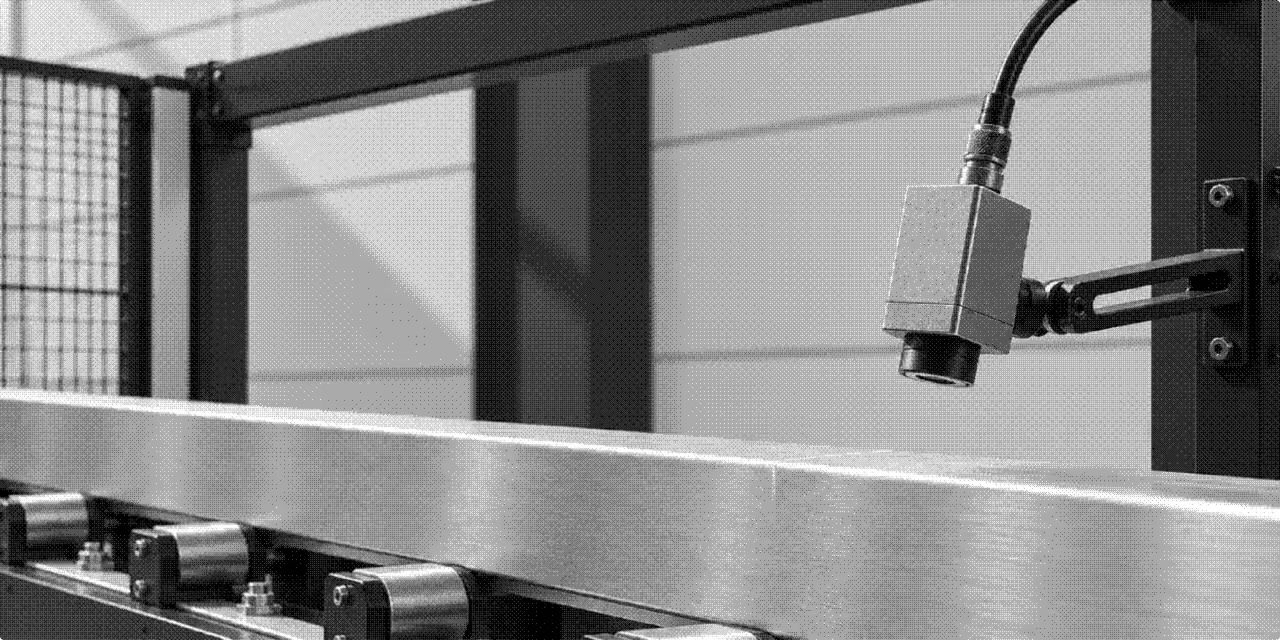

Build continuous improvement into daily work.
Use modular applications to guide work and capture improvement opportunities. Add a feedback button to an operator screen, provide digital work instructions or use a Kata board.
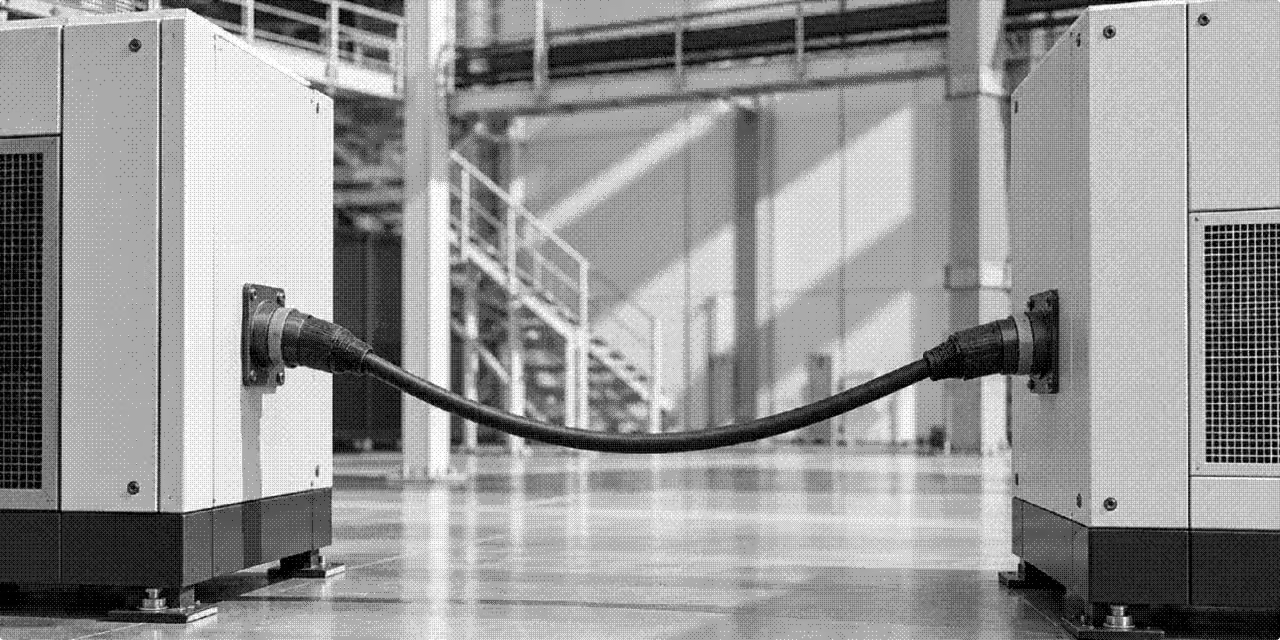

Bring production information together for better decisions.
Connect machines, systems and applications so information can reach the people and tools that need it. Connectivity does not improve the process by itself, but it makes insight and action possible.
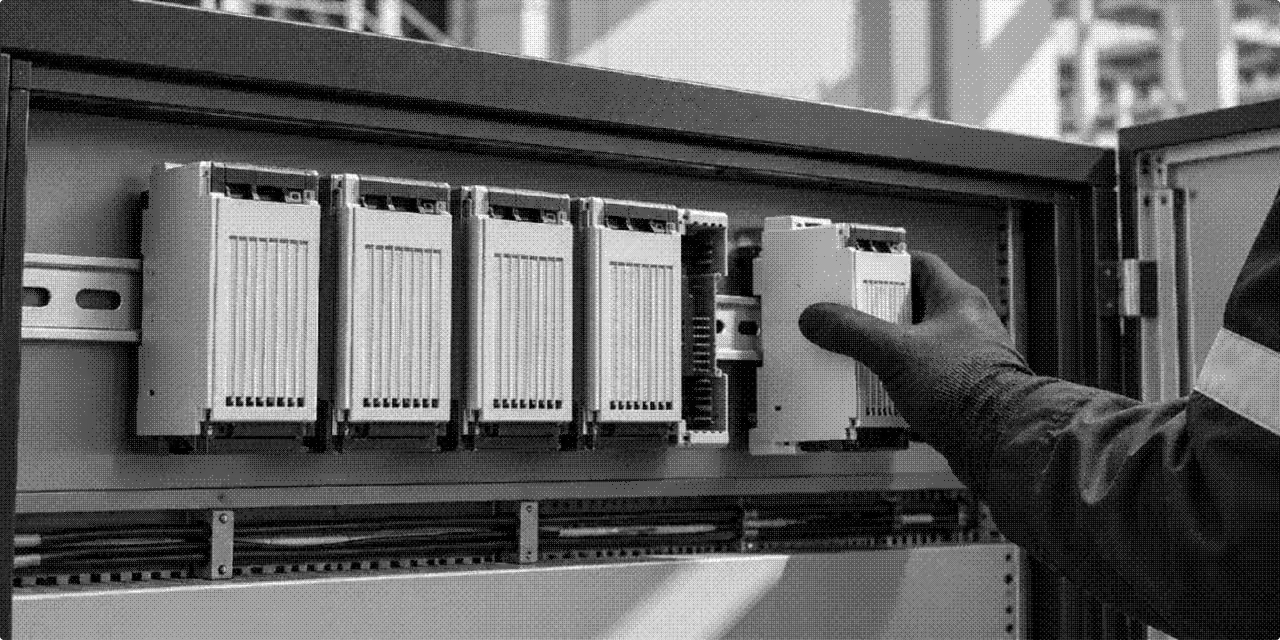

Add improvement capacity when you need it.
Use Mayker’s managed services, continuous development or Centre of Excellence support to keep improvement initiatives moving without building every capability permanently in-house.
From improving the process to strengthening the business.
Operational excellence earns its place when improvements on the shop floor keep creating value beyond the project that introduced them.
Stop solving the same problems again and again.
When technology helps teams apply improvements consistently, recurring issues are less likely to return. Teams can focus on the next problem instead of reopening the last one.
--
Respond faster to change
Adapt workflows and supporting technology as products, priorities and customer requirements change, without waiting for another major implementation.
--
Help people do work they can be proud of
Reduce recurring issues that prevent operators from doing their job well, and make the result of their work visible. That gives people a clearer sense of achievement and helps keep them engaged.
From the shop floor, into practice.


Energy management with Etex
Etex used data analysis to cut energy waste at its plasterboard plants, uncovering excess consumption after every production downtime.

How PSS built a digital manufacturing culture with a custom Mendix MES
How do you build a digital culture that operators actually embrace and keep using? Premium Sound Solutions produces 120 million speakers a year across six global plants for automotive and consumer goods where traceability and quality are non-negotiable.

Sibelco - Workorder Execution App
As Sibelco’s Mendix partner, we co-created their first native low-code app to streamline their maintenance management and integrate it with SAP S/4HANA. The resulting app has improved operating efficiency for technicians, planners and supervisors throughout the organisation.
Terumo's traditional Japanese decision-making process (Ringi) kick-started their low-code journey
Terumo, a global leader in medical technology and innovation, began their low-code adventure by reimagining the Japanese business practice of ringi in the digital era. From there we moved to manufacturing, using Mendix to stream-line their shop floor in Leuven and beyond.
A few things you may want to know.
Learn more about how Mayker scopes, builds and supports applications for production environments.
Mayker’s team brings hands-on experience from working in and with manufacturers such as Agristo, Joris Ide, Etex, PSS and BASF. That experience spans food, chemicals, building materials and high-volume production, including batch environments where recipes, changeovers, yield and quality shape daily operations. We bring those lessons, together with Six Sigma Black Belt expertise, into every project.
Examples include a feedback button built into an application, allowing users to report improvement opportunities without leaving their workflow, and the Kata board at PSS, which helps teams structure actions and follow up on progress.
We work with production teams to define the problem and understand how the process really runs. Gemba walks, operator input and the available data help separate assumptions from evidence and identify a focused first step. In batch manufacturing, that might mean investigating recurring changeover losses, yield variation, quality deviations or missing context around a recipe or material. If the evidence is missing, capturing it may be the first step.