Turn production information into coordinated execution with an MES layer.
Connect orders, instructions, materials, quality and machines in one coherent MES layer, so production teams can execute consistently and keep improving.
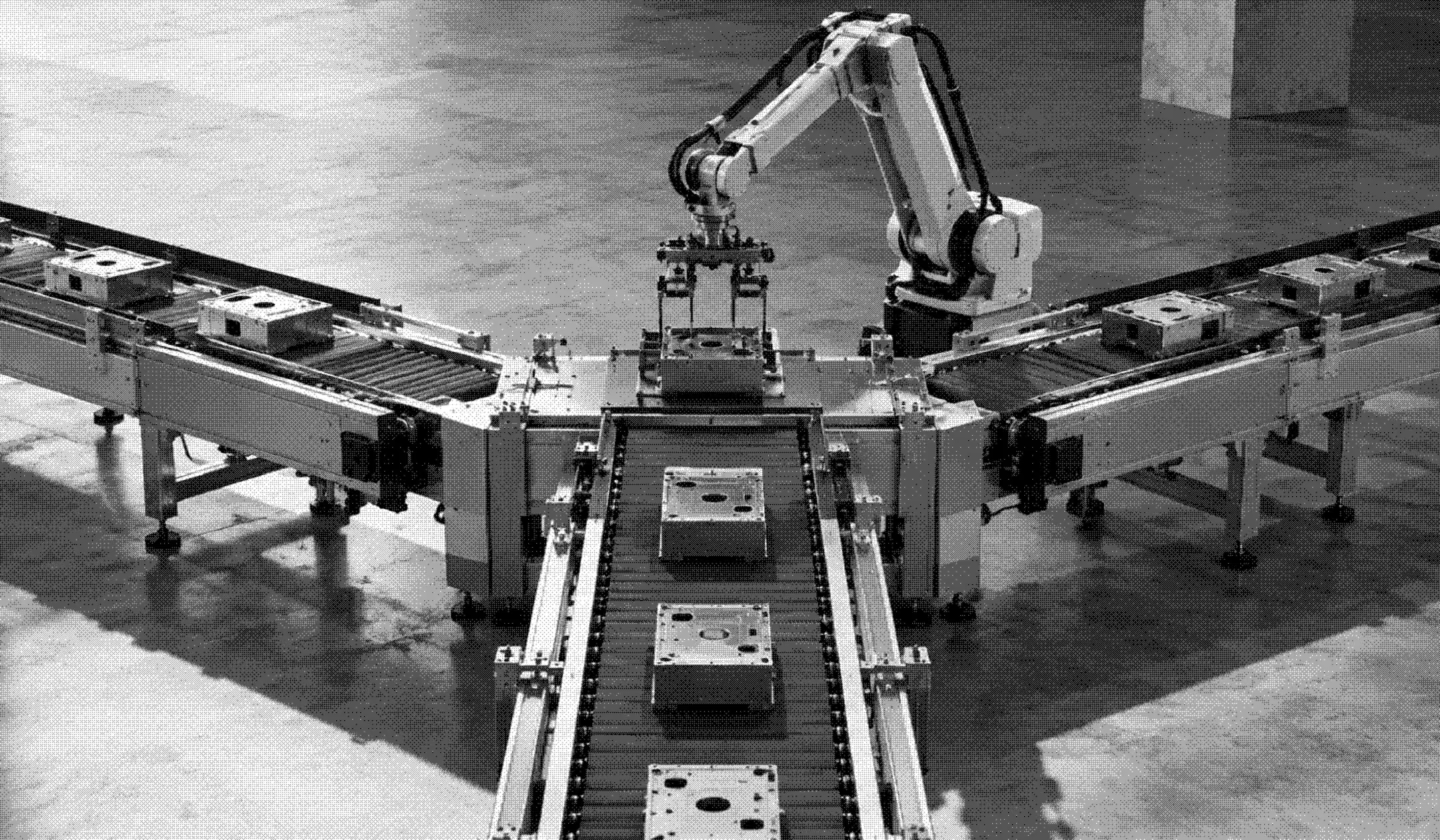
Production keeps changing. The execution layer can’t keep up.
Some manufacturers still coordinate production through paper, spreadsheets and local applications. Others have a legacy MES that is difficult to adapt.
In both situations, production lacks an MES layer that reflects how work actually happens on the floor and can evolve with it.
This makes it harder to coordinate execution, understand where losses occur and put improvements into practice.
What this looks like on the production floor.
- Production events lack the context needed to measure losses and act on them.
- Production teams adapt their processes to the limitations of a rigid legacy MES.
- Critical process knowledge lives in the heads of experienced operators.
One coherent MES layer, built to evolve with production.
We believe MES should grow around the real needs of the shopfloor. Each application supports a concrete production use case, while shared data and architecture keep everything connected and manageable.
Start with the biggest operational pain
Solve the use case creating the most friction on the shopfloor first.
--
Shape applications around the work
Adapt workflows to operators, lines and products instead of forcing one generic process.
--
Connect through a shared backbone
Let applications share data and context rather than creating new silos.
--
Expand without losing control
Add, adapt or replace applications while keeping the MES layer manageable as a whole.
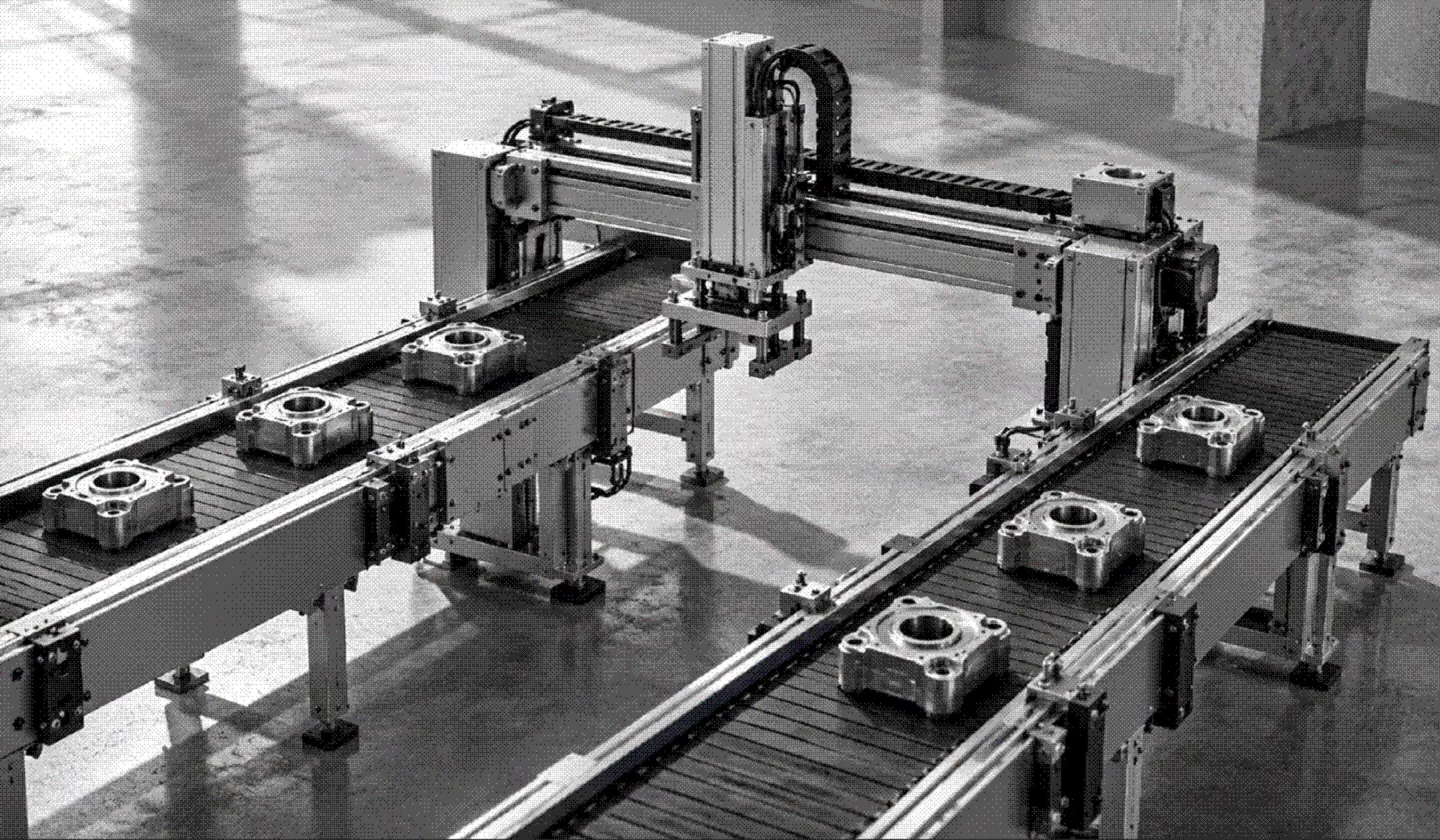


Build the right execution capabilities.
Drawing on our manufacturing and MES experience, we help determine what should remain in existing systems, where Mantsu fits, when a specialist solution is better and where custom functionality is needed. Every choice must support the shopfloor while fitting the wider MES architecture.

Let operational data guide the MES layer.
Use data from across production to understand how processes really run, quantify where problems occur and measure whether improvements have the intended effect.

Give every application a shared backbone.
Connect machines, ERP, existing systems and new applications through open infrastructure. This keeps data flowing between use cases and prevents a growing web of point-to-point integrations.

Manage the MES layer as a whole.
Monitor, support and improve the architecture, integrations, data and functionality after go-live. The layer evolves with production without turning into a new collection of workarounds.
From recording production to improving execution.
An MES layer should do more than register production. By connecting production events to their operational context, it gives teams a stronger basis for decisions and continuous improvement.
Losses become visible sooner
Stops, deviations, waste and performance gaps are connected to their operational context closer to the moment they occur, so teams can act sooner.
--
Stay competitive as production changes
Translate new products, customer requirements and process improvements into daily execution without being held back by rigid systems. This gives production the flexibility to respond as market needs evolve.
--
The cost of change stays under control
Add or adapt capabilities without replacing the entire MES layer or creating another disconnected solution. Future changes become more manageable and predictable.
€7MAnnual savings enabled by digitalisation at one Etex factorytime reduced
~10%Estimated decrease in downtime at PSS
120 MSpeakers scanned at PSS
From the shop floor, into practice.



Energy management with Etex
Etex used data analysis to cut energy waste at its plasterboard plants, uncovering excess consumption after every production downtime.

How PSS built a digital manufacturing culture with a custom Mendix MES
How do you build a digital culture that operators actually embrace and keep using? Premium Sound Solutions produces 120 million speakers a year across six global plants for automotive and consumer goods where traceability and quality are non-negotiable.

Sibelco - Workorder Execution App
As Sibelco’s Mendix partner, we co-created their first native low-code app to streamline their maintenance management and integrate it with SAP S/4HANA. The resulting app has improved operating efficiency for technicians, planners and supervisors throughout the organisation.
Terumo's traditional Japanese decision-making process (Ringi) kick-started their low-code journey
Terumo, a global leader in medical technology and innovation, began their low-code adventure by reimagining the Japanese business practice of ringi in the digital era. From there we moved to manufacturing, using Mendix to stream-line their shop floor in Leuven and beyond.
A few things you may want to know.
Learn more about how Mayker scopes, builds and supports applications for production environments.
Start with the operational or business decisions you want data to improve. Then determine which use cases could create meaningful value, whether the required production data is available and what your organisation can realistically support.A Roadmap Definition helps rank those use cases by business impact and technical feasibility, and turns them into a practical plan with priorities, costs and milestones.
Not necessarily. Some production functions may belong in the ERP. It becomes a problem when more and more custom work is added to make the ERP manage what happens on the shop floor. This can make the system harder and more expensive to change or upgrade.A maturity check helps determine what should remain in the ERP and what belongs closer to production.
Not necessarily, and certainly not all at once. A long-running MES often contains critical process knowledge that was never documented elsewhere.We first map what the system does and how production depends on it. From there, it can be modernised or replaced step by step without losing the knowledge that keeps production running.
Not all at once. What matters is having one target picture: an agreed standard for what the MES layer should support across sites.Each site can move towards that standard when its priorities and system lifecycle allow. The target remains shared; the route and timing can differ by site.
An MES should keep the full context of every batch together: what was planned, which recipe and materials were used, what happened during production and what the result was.This makes batches traceable and helps teams explain differences in yield, quality and performance.