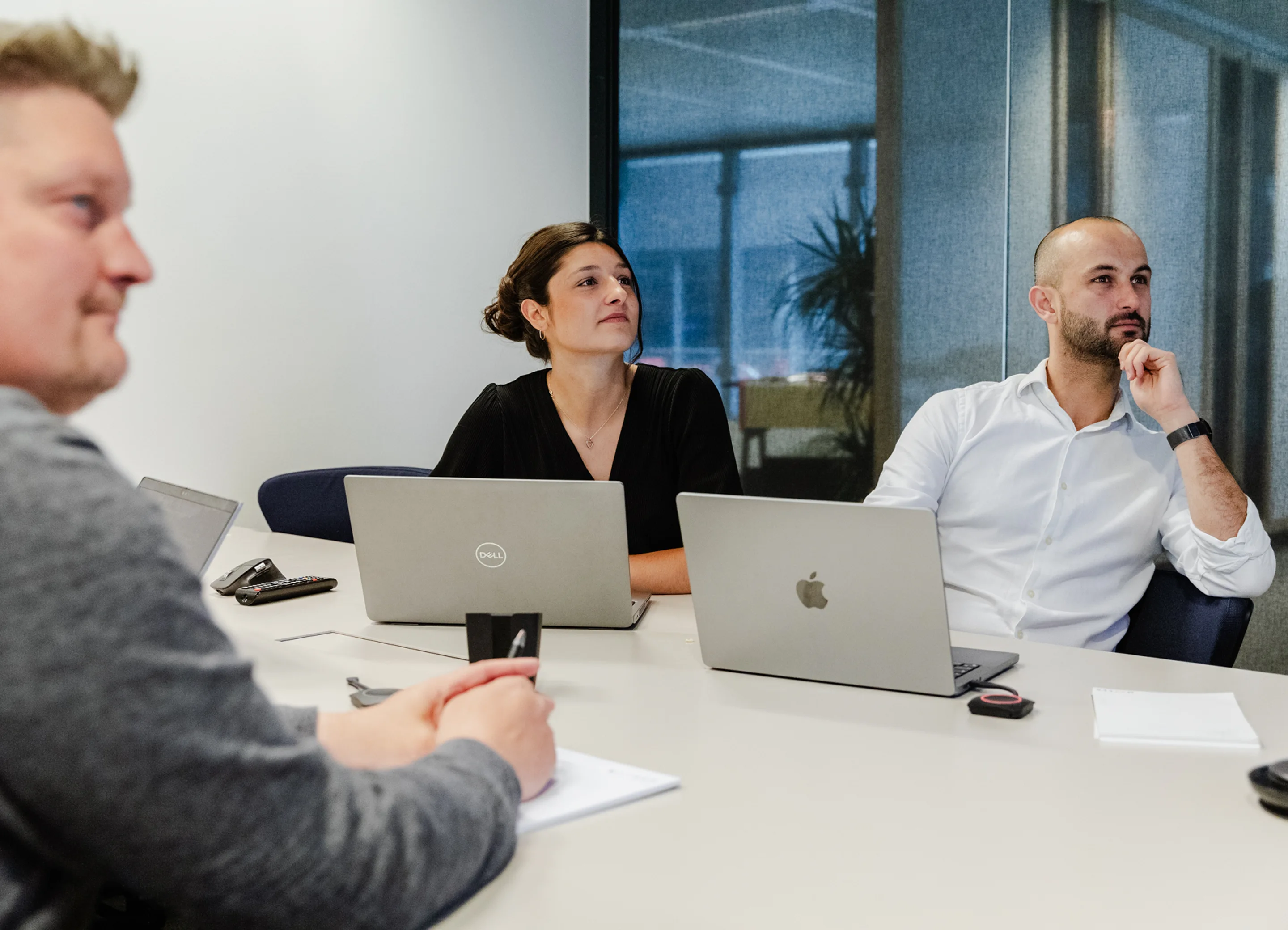
Manufacturing applications that make production easier to run, understand and improve.
Whether you need to fix one process, build a full MES or prove an idea first, we start with how production works and build from there.


Software is not the goal. Better production is.
When critical production steps happen on paper, in spreadsheets or across separate applications, information gets lost and extra work grows.
That makes it harder to execute consistently, trace losses and see whether a change really worked. Applications bring workflows, information and actions together where production happens. They can solve one critical use case or become part of a broader MES layer. Replacing paper with software is not the point.
The goal is to reduce friction, make losses measurable and give teams better control of daily production.
From one critical workflow to a coherent MES layer.
Some production challenges need one focused application. Others need a modular product or a broader MES layer. We help define, validate and build the approach that fits the process and the systems already in place.
A wrong MES is an expensive mistake. Know what you need before you invest. {Maturity Check}
When vendor selection starts before the production requirements are clear, you risk paying for functionality you do not need, choosing an MES that does not fit or spending even more to correct the decision later. We map your processes, application landscape and functional gaps first. You leave with clear MES requirements and a practical path forward.
Useful when {skip}
You are planning a new MES implementation or modernising a legacy MES, but Operations and IT still need to agree on the scope and priorities.
What you get {skip}
- A clear view of your current processes and systems
- Prioritised, RFP-ready MES requirements
- A target architecture and recommended roadmap
Prove the idea before you commit to the build. {App in a Day}
Too many manufacturing application projects only reach users after months of development. By then, changing a wrong assumption has become slow and expensive. Our rapid prototyping sprint turns your idea into a clickable application prototype in one day.
Useful when {skip}
You have a use case or production problem in mind, but want to avoid spending months and budget on an application that misses the mark or never gets used.
What you get {skip}
- A clickable prototype your team can test
- Validated assumptions and stakeholder feedback
- A clear go, change or stop decision
- A roadmap for the next development step
Build a focused application around one production process. {Custom MF applications}
Some processes need more than another spreadsheet, but not an end-to-end MES. We build custom shopfloor applications for specific needs such as production scheduling software, quality, maintenance, shift handover software, electronic batch records or production reporting.
Useful when {skip}
One specific production process keeps causing extra work, errors or delays, but a full MES implementation would be too broad for the problem you need to solve.
What you get {skip}
- A working application for one defined production process
- Digital workflows and data capture where the work happens
- Integration with the systems relevant to that process
Build an MES around the way your production needs to run. {MES implementation}
Standard MES software does not always fit the processes that make your plant different. We implement your manufacturing execution system using Mantsu, custom MES development or a combination of both, without forcing production into a fixed product.
Useful when {skip}
You need a new MES or want to modernise legacy MES software, but standard MES do not fully match the way your production runs.
What you get {skip}
- An MES built around your production processes
- Integration with your existing applications and equipment
- A verified implementation, ready for adoption and go-live
Apply agentic AI to the software behind production. {Agentic AI Workshops}
Generic AI demos rarely show how agents fit into manufacturing applications, existing systems or daily production work. We work hands-on with your development team, in your stack and on a real manufacturing use case. The workshops cover agentic AI in your software delivery process, in the applications you build or both.
Useful when {skip}
Your development team wants to move beyond isolated AI experiments and use agentic AI to build or improve software for production.
What you get {skip}
- Agentic development patterns tested in your own stack
- A practical playbook your team can keep using
- Clear choices around tooling, cost and control
- A blueprint for your first agentic feature
Start on the production floor. Build from there.
We start by understanding what happens on the production floor, then define a focused starting point and build together with the people who use and support the solution.
Start with the reality of your operation.
We observe the process, talk to the people doing the work and look at the systems already in place. No assumptions from a meeting room.
--
Turn a broad challenge into a clear scope
Not every problem needs a big transformation. Together, we define the first process, application or improvement worth tackling.
--
Take the solution into daily production
We bring together the right application, data and infrastructure expertise to design, build, integrate and test the solution with its users.
--
Keep the application working as production changes.
After go-live, we support the application, add new functionality and continue improving it with your team.
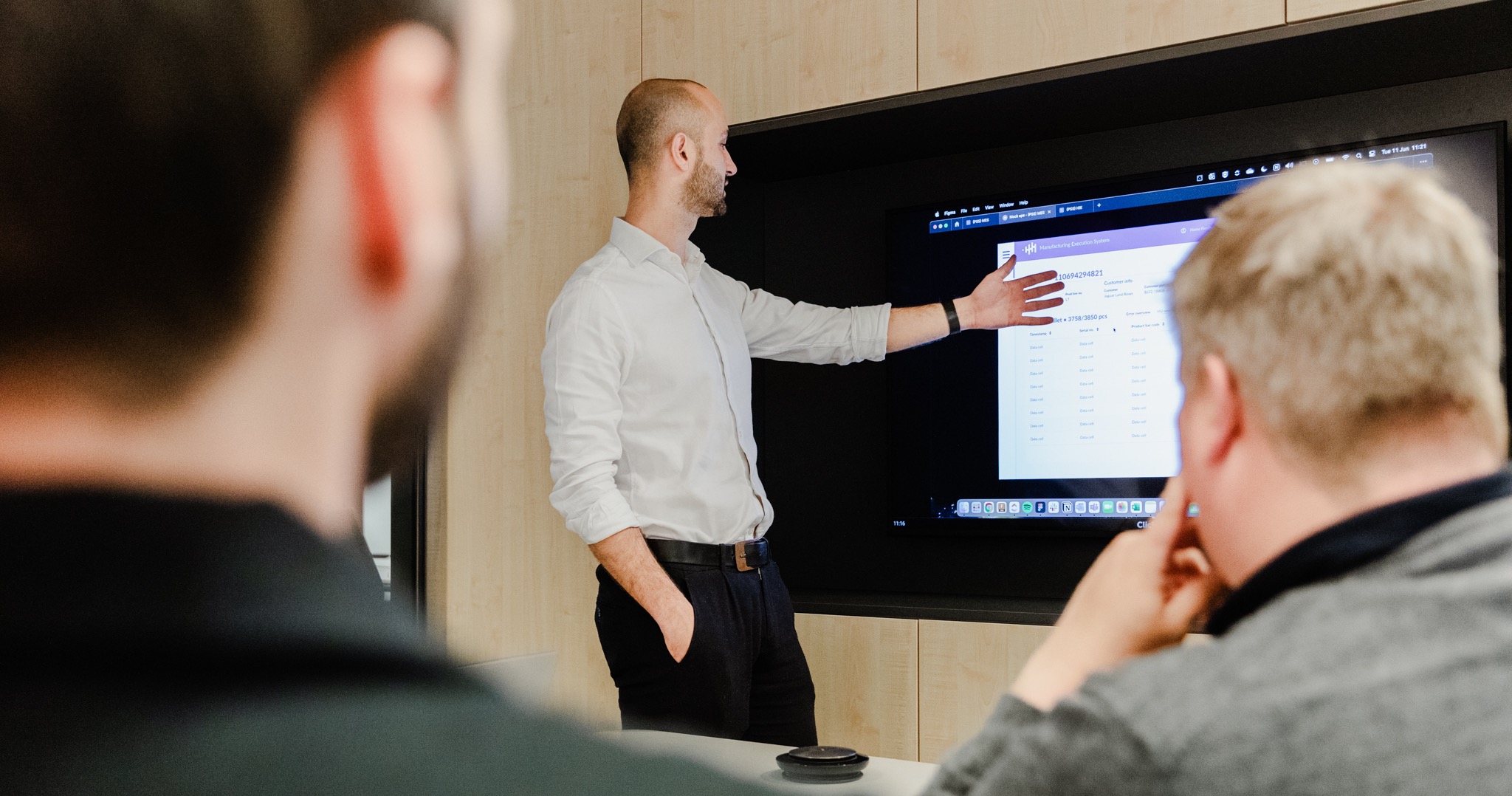
The right technology for the production context.
We choose technologies that fit the realities of manufacturing. That means looking at the use case, the systems already in place and what your team can realistically manage and maintain.




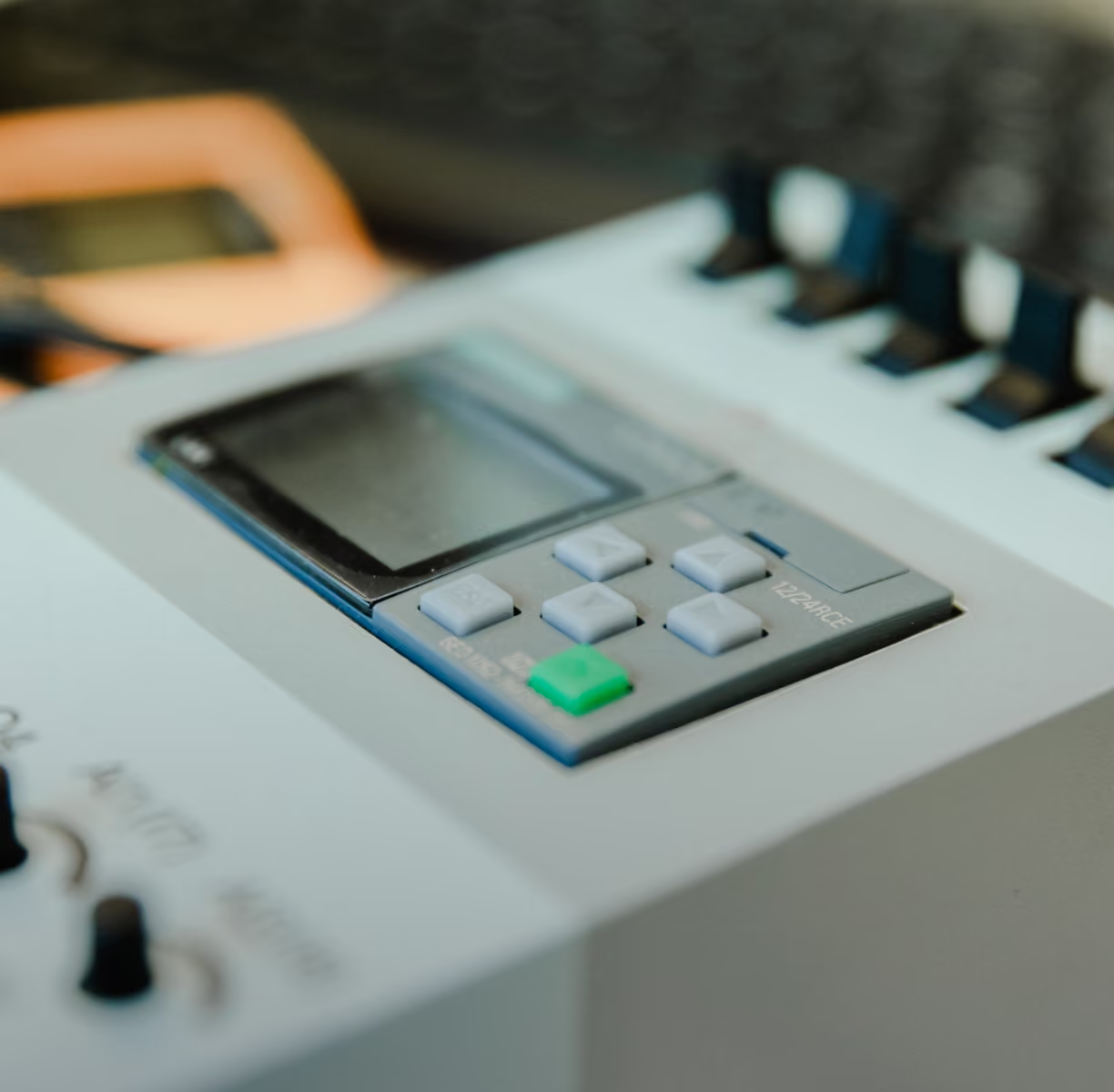
From the shop floor, into practice.

How PSS built a digital manufacturing culture with a custom Mendix MES
How do you build a digital culture that operators actually embrace and keep using? Premium Sound Solutions produces 120 million speakers a year across six global plants for automotive and consumer goods where traceability and quality are non-negotiable.
OEE the Mendix way
Today we’re talking about OEE, or Overall Equipment Effectiveness for those in the know. OEE is a metric for measuring productivity of any given process, primarily within the manufacturing industry.
Mayker launches Mantsu: a composable MES that gets factories to efficiency gains in weeks
Technology company Mayker is launching Mantsu, a composable MES that brings factories to measurable efficiency gains in weeks instead of months, making hidden efficiency losses visible and steerable without the heavy, months-long projects of a classic MES.

Sibelco - Workorder Execution App
As Sibelco’s Mendix partner, we co-created their first native low-code app to streamline their maintenance management and integrate it with SAP S/4HANA. The resulting app has improved operating efficiency for technicians, planners and supervisors throughout the organisation.
A few things you may want to know.
Learn more about how Mayker scopes, builds and supports applications for production environments.
There is no fixed catalogue. Electronic batch records, digital work instructions, production scheduling software and shift handover software are just some examples of applications we have already built.From quality and maintenance to planning, reporting or a process unique to your plant, the application starts from the production problem you need to solve.
Mendix is an enterprise low-code platform used by manufacturers to build custom applications and connect them with systems such as MES, ERP and PLM. It is part of Siemens Digital Industries and integrates with technologies including Opcenter and Teamcenter, which makes it a strong fit for industrial environments. Mendix pricing depends on the number of applications and users, the required package and the deployment model. We calculate the Mendix license cost and infrastructure costs upfront, so you know the full platform cost before development starts.
We believe an MES should be able to change with production. Every manufacturer is different, and processes, equipment and requirements continue to evolve after go-live. A traditional MES can work when processes are highly standardised. But an MES for process manufacturing often needs more flexibility. Mantsu is our modular MES foundation, configured and extended around your processes. It also supports MES modernization by letting you replace a legacy MES step by step.
Yes. You can start by solving one process and add more MES capabilities when the need arises. Mantsu supports this step-by-step approach without requiring a complete MES implementation from day one. We consider the wider architecture from the start, so the first application can connect with new workflows, systems and production data later.
It moves into Run & Improve, a dedicated part of Mayker, not an afterthought.That means support, ongoing development and the changes production asks for next. Because go-live isn’t where the work stops. Systems need to keep running, evolving and staying understandable long after the original project team has moved on.